Split irregular shapes
Measure smaller rectangles, calculate their areas and add them together. Subtract areas that will not receive material, such as large paving or existing beds.
Calculate mulch, gravel or stone volume from your area and depth. Compare cubic yards, cubic metres and bag quantities before asking a supplier for a quote.
Plan the layout ↗Use the depth specified for your project and material. The calculator measures volume; it does not choose installation depth or convert volume to weight.
For feet and inches: area in square feet × depth in inches ÷ 12 = cubic feet. Divide cubic feet by 27 for cubic yards. For metric measurements: square metres × depth in centimetres ÷ 100 = cubic metres.
For example, 60 sq ft at 3 inches deep is 15 cubic feet, or about 0.56 cubic yards. That takes 8 full 2-cubic-foot bags when rounded up. Extra material is optional and applied separately to the base volume.
Measure smaller rectangles, calculate their areas and add them together. Subtract areas that will not receive material, such as large paving or existing beds.
Loose volume can differ from installed volume. Confirm compaction, settlement and any extra allowance with the supplier for your chosen material.
Some suppliers sell stone by weight. Ask for the density of the exact product before converting volume to tonnes or tons. Check delivery minimums separately.
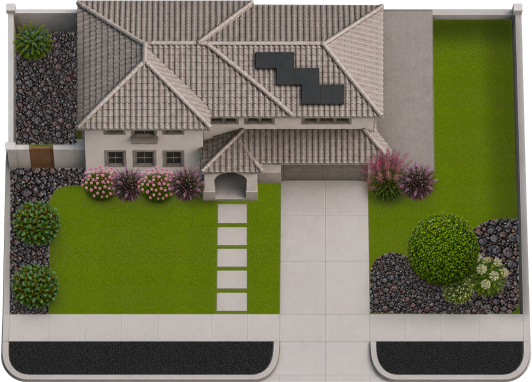
How to arrange it.
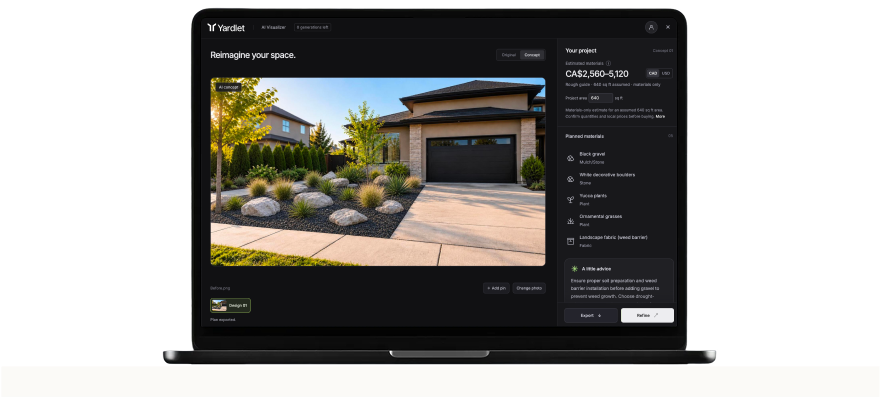
See what your yard could become.